Do AI-Generated Headshots Affect Your Personal Credibility?
The Science Behind It
By Luciano Revera
Founder, Revera Photography
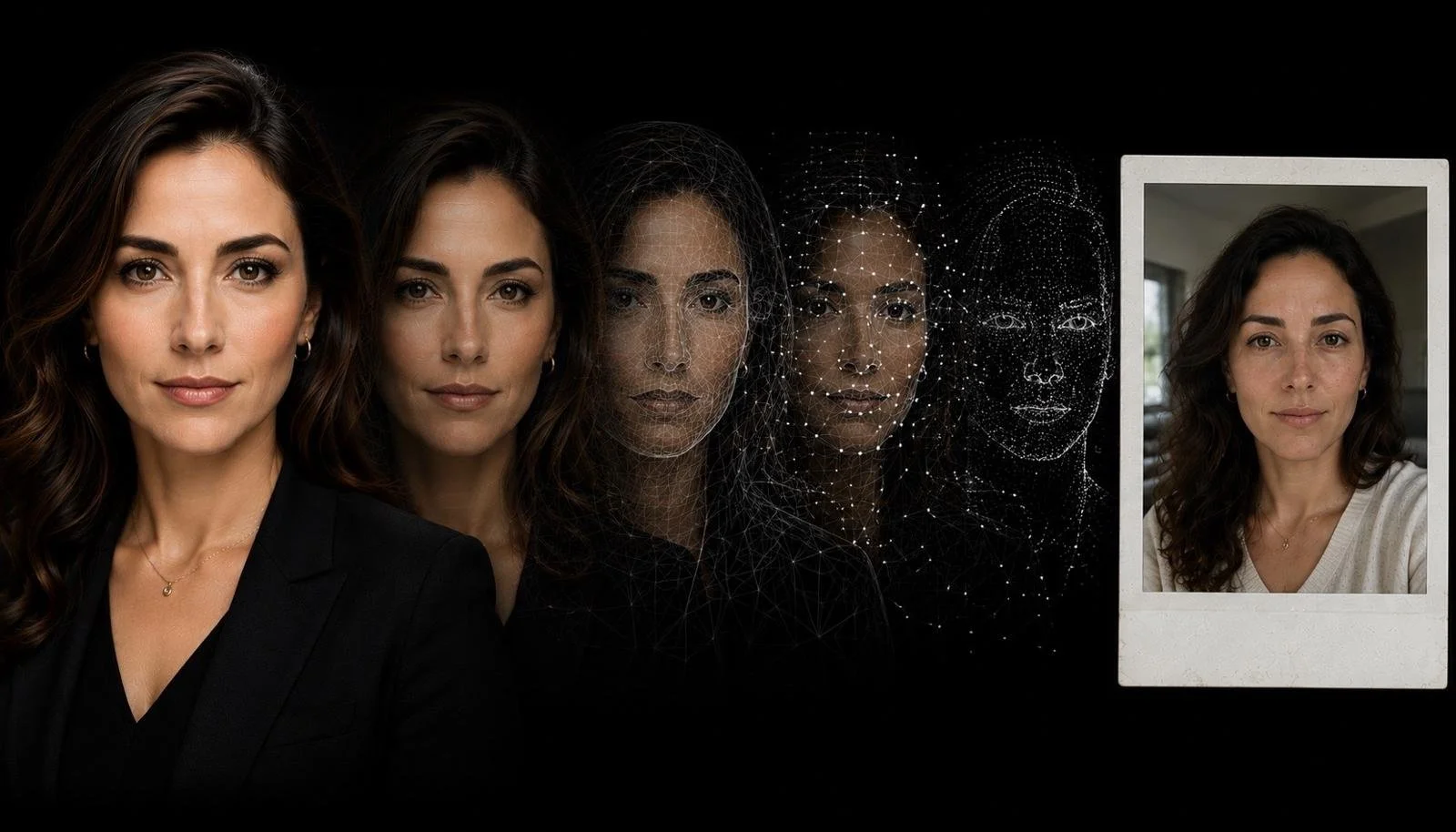
Neuroscience research on facial perception reveals how the market is reacting to AI-generated headshots.
AI-generated headshots are flooding LinkedIn profiles, company websites, and professional directories across nearly every industry. Recruiters, attorneys, executives, consultants, realtors, sales professionals, and countless other professionals are using them to create stronger first impressions and present a more polished professional image online.
The promise is simple: more credibility, more visibility, and ultimately more opportunity.
But as AI-generated headshots become increasingly common, neuroscience research is revealing an important question: are these images actually helping professionals achieve those goals, or are they quietly hurting them?
We dug into the science, and here's what we found.
One of the first things we discovered is that the human brain is far more sophisticated than most of us give it credit for.
For thousands of years, survival depended on our ability to quickly evaluate the people around us.
Could this person be trusted?
Were they a friend or a threat?
Those decisions often carried real consequences.
Modern life looks very different, but our brains still rely on the same instincts.
The moment we see a face, we begin forming impressions.
That idea fascinated Princeton psychologist Alexander Todorov, whose research found that humans begin forming judgments about trustworthiness within a fraction of a second of seeing someone.
In other words, your headshot is influencing perceptions before your experience, credentials, and accomplishments ever enter the conversation.
MIT neuroscientist Nancy Kanwisher reached a similar conclusion. Her research identified a specialized area of the brain specifically dedicated to recognizing faces.
Unlike a logo, website, or business card, a face receives special attention from the brain.
Which means your LinkedIn profile photo isn't simply part of your personal brand.
It's often the first thing people evaluate.
This becomes particularly interesting when artificial intelligence enters the picture—no pun intended.
Because people aren't using AI headshots for fun.
They're using them to create better outcomes.
More opportunities.
More business.
More credibility.
At least that's the goal.
And on the surface, AI delivers.
The lighting is beautiful.
The skin looks flawless.
The expression appears confident.
In many cases, the image looks better than the original photo.
But here's the question that matters.
Is a more polished image automatically a more trustworthy image?
According to researchers who study facial perception, the answer is no.
The human brain isn't looking for perfection.
It's looking for authenticity.
And that's where another interesting discovery enters the conversation.
Psychologist Paul Ekman spent decades studying the subtle facial signals humans use to evaluate one another. His research showed that people are remarkably sensitive to tiny cues in expression, emotion, and behavior.
Most of us aren't aware we're noticing these signals.
Yet we respond to them constantly.
That's why a genuine smile feels different from a forced smile.
That's why you can instantly like or dislike someone the first time you meet them, before they say or do anything.
And that's where AI-generated portraits run into a problem.
AI is exceptionally good at making people look good.
But looking good and looking authentic are not the same thing, especially when professional opportunities are involved.
Imagine a recruiter reviewing dozens of LinkedIn profiles for an open position.
Or a homeowner searching for a realtor.
Or a business owner looking for an attorney.
Or a company evaluating consultants before reaching out.
Inevitably, your image is one of the first things being evaluated.
That's why the old saying, "You only get one chance to make a first impression," remains as true today as ever.
In a digital world, that first impression often happens before a conversation, a meeting, or even the first email.
And once that opportunity passes, you may never know it was there.
Think about someone you know well.
A close friend or a family member.
If I showed you a real photograph of that person and an AI-generated version of that same person, you would notice something different.
You might not be able to explain exactly what it is.
But you would know something is off.
Not fake.
Not obviously artificial.
Just different.
That reaction isn't your imagination.
It's your brain doing what it has always done: searching for the subtle signals that reveal whether someone is genuine.
Most people won't look at an AI-generated headshot and say:
"That's AI."
They simply know something is wrong.
So, should you use an AI-generated headshot or a professional headshot?
If your goal is entertainment, social media, or simply experimenting with new technology, an AI-generated headshot won't hurt you. The technology is impressive and capable of creating visually appealing images in seconds.
However, if your professional success depends on your online image, an experienced professional photographer can help you create an image that communicates confidence, authenticity, and your value to the people you want to reach.
At the end of the day, people don't hire images.
They hire real people.
And real people want to do business with real people.
Research Referenced
Alexander Todorov — Princeton University — Research on first impressions, facial perception, and trustworthiness judgments.
Nancy Kanwisher — Massachusetts Institute of Technology (MIT) — Research on facial recognition and face perception.
Paul Ekman — Research on facial expressions, emotion, and human perception.